

Master Rings Explanation: A Guide to Their Uses and Benefits
Master rings explanation is critical for anyone involved in lifting and rigging operations. Master links or head-rings, also known as oblong links, are a basic type of lifting and rigging hardware fitting; they are designed to assist with the assembly of single or multi-leg slings. Available in various grades, these essential devices help create secure connection points in rigging applications, which might raise questions such as:
- What are they used for?
- What are the different types?
- How do you determine if they are still in good condition?
What are they and what are they used for?
Master links and rings are significant devices in the lifting and rigging industry; they are closed-loop devices typically crafted from forged alloy steel and are utilized to form connection points in rigging applications using various materials such as chain, rope, wire rope, and synthetic slings. Their versatility allows for use in both single leg and multiple leg configurations, which is why understanding these components is essential for safe lifting.
What are the different types?
In the marketplace, you can find a variety of master links; however, the most popular ones include:
Master Link
Elongated in shape, master links typically initiate an assembly for chain or wire rope slings. The oblong master link serves as the connection point for the sling legs.
Master Link Sub-Assembly
This type of link works in conjunction with a master link to create multiple legs. While it is possible to attach multiple legs directly to a single master link, a larger and heavier master link is generally necessary for this purpose, which may complicate handling. Sub-assemblies, therefore, provide a practical solution by allowing a master link to support heavier loads efficiently.
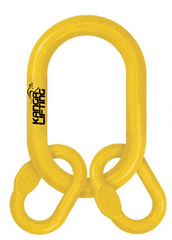 Master Rings
Master rings are circular and permanently closed. They serve similar purposes as master links in rigging applications, typically utilized for chain and wire rope sling assemblies. These rings are not usually associated with large working loads but are frequently employed as tie-down accessories paired with webbing, particularly in the transport industry.
Coupling Links
Coupling links, which can be mechanical or welded, are primarily used to link a segment of chain to a master link or a fitting. They may also create connections between master links, hooks, or other hardware components.
-
How do you determine if they are still in good condition?
Master links should be removed from service if any of the following conditions are present: - Missing or illegible identification tag.
- Indications of heat damage, including weld splatter or arc strikes.
- Excessive pitting or corrosion.
- Bent, twisted, distorted, stretched, elongated, cracked, or broken load-bearing components.
- Excessive nicks or gouges.
- Evidence of unauthorized welding or modification.
- Other conditions causing doubt as to continued use.
Please contact us if you have any queries, and one of our friendly staff at All Lifting will assist you; or you can visit our online shop to find out additional information.


